Platform Overview
Understanding the Daflevok Platform
A reference guide to the scope, interface structure, and intended purpose of the Daflevok information-organisation service.
What Daflevok is designed to do
Daflevok is a service for organising and presenting information in a structured, navigable format. Its primary purpose is to give users a consistent way to locate, review, and work with information that has been arranged according to a defined classification structure.
The platform does not generate conclusions or produce outcomes on the user's behalf. Instead, it presents information in a form that supports independent review. Users retain responsibility for how they interpret and apply what they find within the service.
A note on verified content
Information presented within the Daflevok interface reflects the current state of the available reference material. Where content has not been independently verified, this is indicated. Users should not treat the presence of information in the platform as confirmation of its accuracy beyond what is stated.
How the platform presents information
The Daflevok interface is organised into discrete sections, each corresponding to a specific category of information. Navigation between sections follows a consistent pattern, allowing users to move between reference areas without losing their position within the broader structure.
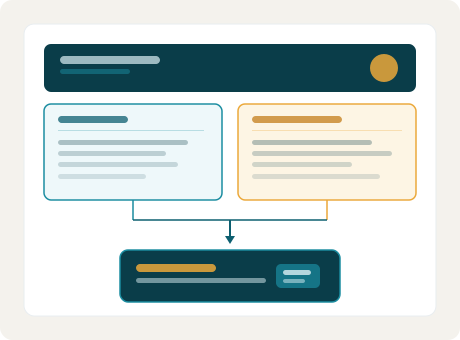
Within each section, content is arranged to distinguish between different types of material: introductory explanations, detailed reference entries, and operational notes each occupy clearly demarcated areas of the interface.
What users should understand first
Access to certain areas of the Daflevok service may require a submitted enquiry. Before contacting the support team, it is useful to have reviewed the available public reference material so that any questions are specific and can be addressed more efficiently.
The team can clarify information that is already presented in the platform, explain how a particular section is structured, or advise on the most relevant areas for a user's stated purpose. The team cannot make commitments about access approval, confirm information beyond what is in the service, or provide guarantees about response timelines.
Frequently asked about the platform
What type of information does Daflevok organise?
Daflevok is designed for structured reference information relevant to the service's subject domain. The categories within the platform reflect the principal areas of available content. The service does not handle personal account data, sensitive personal records, or information outside the defined classification structure.
Can I access all sections of the platform without an enquiry?
The publicly available sections of the Daflevok interface are accessible without prior contact. Some reference areas may indicate that access requires a submitted enquiry, in which case users can use the enquiry form to express their interest and describe their purpose.
Is the information in the platform independently verified?
Daflevok presents information drawn from the service's reference material. The platform does not claim that all content has been independently audited or verified by a third party. Where specific content reflects a known limitation, this is noted within the relevant section.
How is the classification structure decided?
The classification structure reflects the logical organisation of the available information. Categories are defined based on the subject relationships between reference items, not on arbitrary groupings. The structure may be updated as the available information set expands or is refined.
Who should I contact if information in the platform appears incorrect?
If you believe that information presented within the Daflevok interface contains an error or is out of date, please use the enquiry form to submit a note. The team reviews submissions and will follow up where the concern can be addressed.